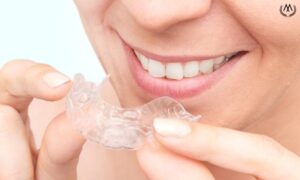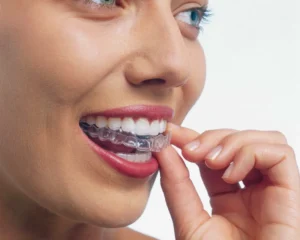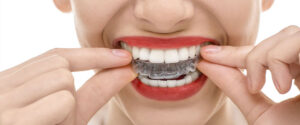
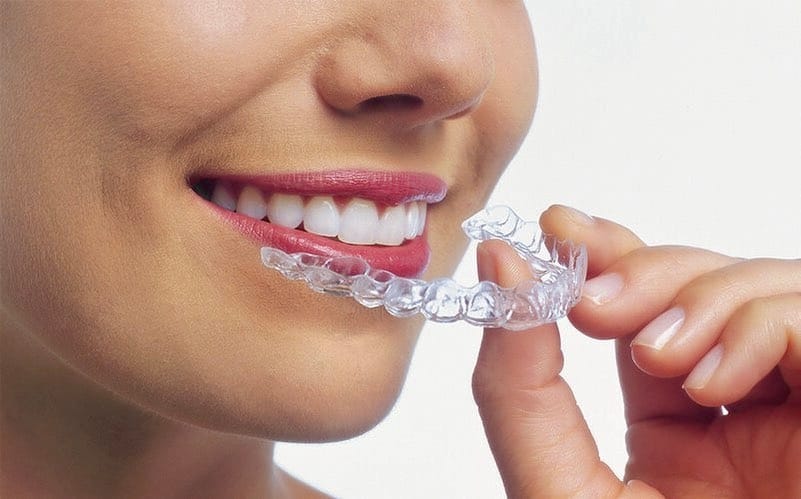
Upper front teeth that stick out noticeably in front of the lower teeth are a common issue that bothers many people, both aesthetically and functionally. In orthodontics, this condition is called overjet. So can these cases be corrected with clear aligners? In this article, we cover what overjet is, what causes it, and how effective clear aligner treatment can be in this situation.
What Is Overjet?
Overjet is the condition in which the upper front teeth protrude horizontally forward relative to the lower front teeth. A mild degree of overjet is considered normal in most people; however, when this distance increases significantly, a “protruding teeth” appearance and various problems can arise.
Common signs include:
- Upper front teeth pushing the lip forward
- Difficulty closing the lips comfortably
- Teeth being more exposed to injury, especially breaking from impact
- Misalignment when biting and chewing
- Dissatisfaction with the appearance of the smile
What Causes Overjet?
Protruding front teeth may not come down to a single cause. The main causes include:
- Tooth-related causes: Upper front teeth that tilt forward.
- Jaw-related causes: A lower jaw that sits back or an upper jaw that sits forward.
- Habits: Childhood habits such as prolonged thumb sucking, pacifier use, or tongue thrusting.
- Hereditary factors: Family traits in jaw and tooth structure.
Whether the cause is dental or skeletal plays a decisive role in determining the right treatment method.
Can Clear Aligners Correct Overjet?
The answer depends on the degree and source of the overjet.
Situations Where Clear Aligners Can Be Effective
- Mild to moderate overjet: Especially when the issue relates to the tilt of the teeth, aligners can achieve correction by moving the upper front teeth backward.
- Cases where space can be created: If there is enough room to move the teeth back, or if that space can be obtained with minor space creation (such as IPR), treatment proceeds more predictably.
- Mild protrusion combined with crowding or spacing: Can be addressed together in a single treatment plan.
Situations Where Clear Aligners Alone May Not Be Enough
- Significant jaw discrepancy: If the lower jaw sits noticeably back, aligners alone can’t change the bone structure; in this case, braces, additional appliances, or surgically assisted approaches may come into play.
- Cases requiring a large amount of tooth movement: If the teeth need to be moved back a long way, tooth extraction or additional mechanics may be considered.
- Growth potential in childhood and adolescence: During this period, early intervention methods that take advantage of jaw growth may be preferred.
For this reason, a detailed examination, imaging, and digital simulation are needed to decide on suitability.
How Does the Clear Aligner Process Work for Overjet?
- Detailed Examination and Imaging: The tooth and jaw relationship is assessed with X-rays and photographs.
- Digital Scan and Simulation: The backward movement of the upper front teeth and the appearance expected at the end of treatment are planned in three dimensions.
- Creating Space: If needed, space for moving the teeth backward is created through IPR (interproximal reduction) or other methods.
- Use of Attachments: Small attachments may be placed to control the tilt of the teeth more precisely.
- Wearing the Aligner Series: Aligners are changed according to the schedule set by your orthodontist, and progress is monitored through regular check-ups.
- Retention: At the end of treatment, a retainer is used to keep the teeth in their new position.
How Long Does Treatment Take?
The duration varies according to the size of the overjet and the complexity of the case. Mild cases can be completed in a few months, while more pronounced ones can take a year or longer. The exact duration becomes clear after digital planning.
What Happens If Overjet Is Left Untreated?
Not every protrusion necessarily requires treatment; however, pronounced overjet can lead to certain risks and discomforts:
- A higher risk of front teeth breaking in situations such as falls, sports, or accidents
- Difficulty closing the lips and dry mouth
- Misalignment in chewing and biting function
- Discomfort in terms of aesthetics and self-confidence
It’s best to decide together with your orthodontist whether treatment is necessary.
Conclusion
Clear aligners can be an effective and comfortable option for mild to moderate overjet cases. However, in cases involving a pronounced jaw discrepancy, they may fall short on their own and require a different approach. Which method is right for you becomes clear after a detailed examination and digital simulation.
At Dr. Murat Kaptaç’s clinic, we assess whether your case is suitable for clear aligners using digital scanning and 3D simulation for your protruding front teeth concern, and create a personalized treatment plan for you.
Contact us to schedule an evaluation for your protruding front teeth.