One of the most common questions from people just starting clear aligner treatment is: “How will I manage this in my daily life?” Between meals, work, exercise, and social plans, the rule of wearing aligners 20–22 hours a day can seem hard to follow at first glance. But once a simple routine settles in, wearing your aligners becomes an automatic habit within a few weeks. In this article, we walk step by step through how a typical day might go.
What Is the 22-Hour Rule?
For clear aligners to be effective, they need to be worn for approximately 20–22 hours a day. This means you take them out only while eating and during cleaning. The total time your aligners are out should not exceed about 2 hours a day.
This rule allows your teeth to move with continuous, controlled force. The longer the aligners stay out, the slower tooth movement becomes and the longer treatment may take.
Morning Routine
1. Take out your aligners and put them in their case. When you wake up, the first thing to do is remove your aligners and place them in their case — don’t leave them on the nightstand, the bed, or in a napkin.
2. Have your breakfast. You can eat breakfast while your aligners are out. Drinking anything other than water with the aligners out also prevents them from staining or warping.
3. Brush your teeth. Brush before putting your aligners back in; if food particles stay trapped under the aligners, the risk of cavities and gum problems goes up.
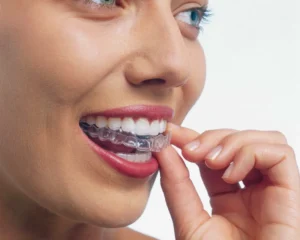
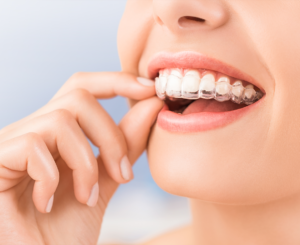
4. Rinse your aligners and put them in. Rinse them with lukewarm water and put them back in. They’ll stay in throughout the day.
Daytime Routine
At work or school: Your aligners stay in. A slight lisp may creep into your speech in the first few days; this usually goes away within a few days.
Lunch: Take your aligners out and put them in their case. After eating, brush your teeth or at least rinse your mouth well. Keeping a small toothbrush and aligner case with you at work or when you’re out makes this much easier.
Snacks and drinks: Taking your aligners out and putting them back in for every snack can be tiring. For this reason, reducing snacks and grouping your meal times together increases the amount of time your aligners stay in.
Drinking water: You don’t need to remove your aligners to drink plain water.
Evening Routine
1. Dinner. Take your aligners out and eat your meal.
2. Thorough cleaning. Brush your teeth and floss. Gently clean your aligners with a soft brush and lukewarm water; avoid hot water or harsh cleaning products.
3. Put your aligners in. After cleaning, put your aligners back in. They’ll stay in through the night while you sleep, which makes up the largest part of the 22-hour daily wear time.
Tips for Special Situations
Social gatherings and dining out: If you’re eating out, don’t forget to bring your aligner case with you. Never wrap your aligners in a napkin and leave them on the table — this is the most common cause of loss.
Exercise: In non-contact sports, your aligners can stay in. In contact sports, depending on your orthodontist’s recommendation, you may need to take your aligners out and use a separate mouthguard.
Travel: Don’t forget to bring a spare aligner case, a small toothbrush, and your next aligner set.
If you forgot to put them in: Put them in as soon as you notice. To make up for it, you can wear them a few extra hours, but if they were out for a long time, let your orthodontist know.
Habits That Make the Routine Easier
- Use reminders: You can set a reminder on your phone to put your aligners back in after meals.
- Keep the aligner case visible: Designate a fixed spot in your bag, at work, and at home.
- Plan your meal times: Three main meals and at most one or two snacks a day reduces the number of times you need to take your aligners out.
- Track your time: Some patients keep track of how long their aligners are out using a small note or an app.
Conclusion
The key to success in clear aligner treatment is sticking to your daily wear time. When you build a simple routine for the morning, daytime, and evening, the 22-hour rule becomes a natural part of your daily life. The more disciplined you are, the more likely your treatment is to progress as planned.
At Dr. Murat Kaptaç’s clinic, we offer our patients practical recommendations that fit their daily lives for clear aligner treatment, and we support them at every stage of the process.
Contact us with any questions about clear aligner treatment.