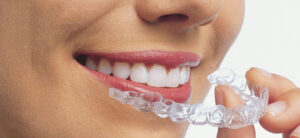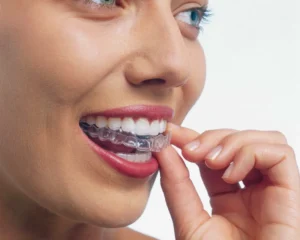

If you’ve noticed that your upper front teeth cover your lower front teeth to a large extent when you close your mouth, you may be dealing with what’s known as a deep bite. A mild degree of overlap is normal; however, when this overlap increases significantly, it can lead to consequences such as tooth wear, gum problems, and jaw discomfort. In this article, we cover what a deep bite is, what causes it, and how effective clear aligner treatment can be in this situation.
What Is a Deep Bite?
A deep bite is a condition in which the upper front teeth overlap the lower front teeth vertically more than normal. With the mouth closed, most of the lower teeth, sometimes nearly all of them, may be hidden from view. In extreme cases, the lower front teeth may touch the gum tissue behind the upper teeth.
Common signs include:
- The lower front teeth being noticeably covered by the upper teeth
- Wear or chipping along the edges of the front teeth over time
- Gum irritation behind the upper teeth or on the lower teeth
- Jaw fatigue or discomfort while chewing
- Jaw joint complaints in some patients
What Causes a Deep Bite?
A deep bite may not come down to a single cause:
- Tooth-related causes: Front teeth that have over-erupted, or back teeth that haven’t erupted enough.
- Jaw-related causes: A lower jaw that sits back, or differences in the vertical growth of the jaw bones.
- Early tooth loss: Loss of back teeth can reduce the height of the bite.
- Habits and heredity: Family traits in jaw structure and certain childhood habits.
Whether the cause is dental or skeletal plays an important role in determining the right treatment method.
Can Clear Aligners Correct a Deep Bite?
The answer depends on the degree and source of the deep bite.
Situations Where Clear Aligners Can Be Effective
- Mild to moderate deep bite: Especially when the issue is dental, correction can be achieved by controlled pressing down of the front teeth (intrusion) or by slightly raising the back teeth.
- Aligner designs that help open the bite: In some aligner designs, bite ramps or biting surfaces on the back teeth can help open the bite slightly.
- Mild cases combined with crowding or spacing: These can be addressed together in a single treatment plan.
Situations Where Clear Aligners Alone May Not Be Enough
- Pronounced deep bite: If the vertical relationship is severely disrupted and the bite needs to be opened considerably, aligners alone may not be enough. In this case, braces, additional appliances, or a combined approach may come into play.
- Cases caused by jaw structure: A mismatch in bone structure can’t be changed by aligners alone; surgically assisted approaches may be considered.
- Patients with growth potential: In childhood and adolescence, early intervention methods that take advantage of jaw growth may be preferred.
For this reason, a detailed examination, imaging, and digital simulation are needed to decide on suitability.
How Does the Clear Aligner Process Work for a Deep Bite?
- Detailed Examination and Imaging: The tooth and jaw relationship is assessed with X-rays and photographs.
- Digital Scan and Simulation: The pressing down of the front teeth, the position of the back teeth, and the bite expected at the end of treatment are planned in three dimensions.
- Use of Attachments: Small attachments that support vertical tooth movement may be placed.
- Wearing the Aligner Series: Aligners are changed according to the schedule set by your orthodontist, and progress is monitored through check-ups.
- Refinement: If needed, additional aligner sets can be prepared to bring the bite to the desired level.
- Retention: At the end of treatment, a retainer is used to maintain the new bite.
How Long Does Treatment Take?
The duration varies according to the depth of the bite and the complexity of the case. Mild cases can be completed in a few months, while more pronounced ones can take a year or longer. Vertical tooth movements generally progress more slowly than horizontal ones, so the exact duration becomes clear after digital planning.
What Happens If a Deep Bite Is Left Untreated?
Not every deep bite necessarily requires treatment; however, in pronounced cases some problems can develop over time:
- Wear and chipping of the front teeth
- Gum irritation or gum recession
- Difficulty with chewing function
- An increase in jaw joint complaints
It’s best to decide together with your orthodontist whether treatment is necessary.
Conclusion
Clear aligners can be an effective and comfortable option for mild to moderate deep bite cases. However, in cases of pronounced vertical discrepancy or jaw-related causes, they may fall short on their own and require a different approach. Which method is right for you becomes clear after a detailed examination and digital simulation.
At Dr. Murat Kaptaç’s clinic, we assess whether your case is suitable for clear aligners using digital scanning and 3D simulation for your deep bite concern, and create a personalized treatment plan for you.
Contact us to schedule an evaluation for your bite concern.